The problem isn’t that you need more products
Let me guess how the last few months have gone.
You’re making sales. Actual sales, from real people. And you’re still exhausted, still refreshing your shop, still wondering why the numbers don’t add up to the life you pictured when you started.
Here’s the part no one says out loud. If you’re stuck selling $5 and $9 digital products, the answer was never “make more of them.” You don’t have a product problem. You have a pricing and positioning problem.
You are not underpricing. You are under-positioning.
This guide walks through 15 premium digital products you can create and sell online in 2026, with a realistic price range for each and the reason each one can command more than a few dollars. Some you can build yourself. Several you can sell without designing a single thing from scratch. All of them share one trait: they let you hit a real income goal with a handful of sales instead of a mountain of them.
What actually makes a digital product “premium”
Premium has almost nothing to do with how many hours you poured in. It has everything to do with the size of the problem you solve and the buyer you solve it for.
Look at the math, because the math is the whole argument:
- 10 × $500 = $5,000. That’s a business.
- 700 × $7 = $4,900. That’s a job you built for yourself, with worse hours.
Same income goal. A fraction of the sales, the customer service, the refunds, the listing photos, the constant “what do I make next.” At $100 to $500 per product, ten to fifty sales gets you to a $5,000 month.
So what lets you charge that? Three things.
It solves a bigger, more expensive problem. A $7 printable saves someone a little time. A $400 website template saves someone weeks of frustration and makes their business look legitimate. People pay in proportion to the pain removed.
It’s sold to a buyer who’s ready to invest. Bargain hunters and business owners are two different people having two different conversations. A $500 sale isn’t dozens of times harder to make than a $7 sale. It’s a different buyer, a different offer, and a conversation you can learn to have.
It’s positioned as a solution, not a file. “A Canva template” is a file. “A done-for-you brand kit that makes your business look expensive in an afternoon” is a solution. Same asset. Wildly different price.
And here’s the reframe that changes everything for creative sellers: premium does not mean you personally designed it. With the whitelabel model, you sell professionally made templates under your own brand, keep the profit, and skip the months of learning design or code. More on that after the list, because it’s the shortcut most people miss.
15 premium digital products to sell online
1. Showit website templates
Price range: $200–$500
Showit is a drag-and-drop website platform loved by coaches, photographers, and creatives who want a designer look without a developer. A Showit template is a complete, ready-to-customize site the buyer drops their own words and photos into.
Who buys it: service providers launching or rebranding who want something polished fast. The problem it solves is enormous. Building a site from scratch is overwhelming and hiring a designer runs into the thousands. A template gives them the professional result without either.
What makes it premium is the outcome. This isn’t decoration, it’s the buyer’s storefront, the thing that decides whether a lead trusts them. That’s worth real money.
The best part for you: you can sell whitelabel Showit templates you didn’t design. You resell proven, done-for-you templates under your own brand. A niche variation that sells well is templates built for one audience, like “Showit sites for wellness coaches,” where the buyer feels it was made for exactly them.
If you are interested in learning more about selling Showit templates, check out the Superhero Academy.
2. WordPress and Squarespace website templates
Price range: $150–$400
Same whitelabel model, different platforms. Plenty of business owners aren’t on Showit. They’re on WordPress or Squarespace because that’s what they already know or what their host supports.
Who buys it: bloggers, small business owners, and service providers who want a refined site on the platform they’ve already committed to. The problem it solves is the gap between a clunky free theme and a custom build they can’t afford.
These are premium because a website is infrastructure. It works for the buyer every day, around the clock, whether they’re at their desk or asleep. People pay more for things that keep earning.
A smart niche angle is a specific business type plus a specific platform, like “Squarespace templates for interior designers.” The narrower the fit, the easier the sale, and the more you can charge because it feels custom.

3. Email marketing template suites
Price range: $100–$300
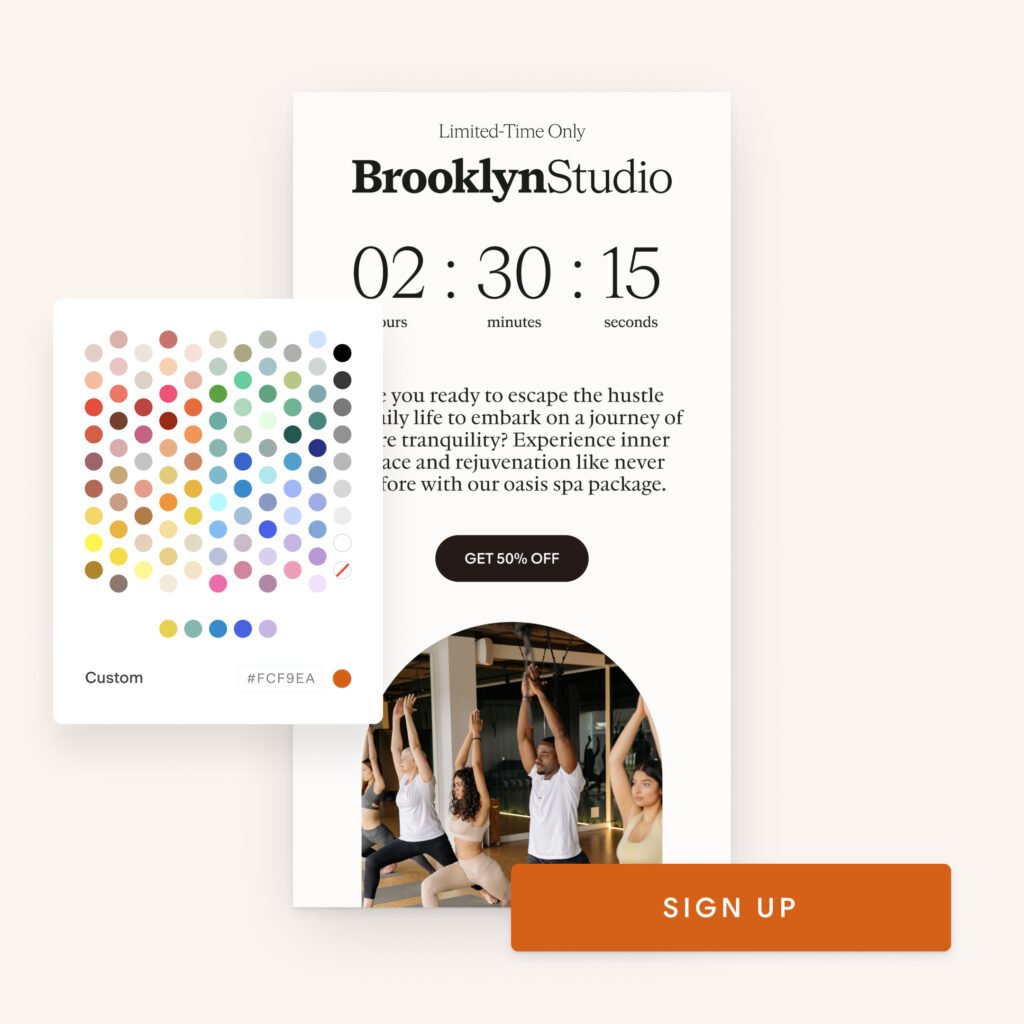
An email suite is a plug-in set of templates for platforms like Flodesk, ConvertKit, or Mailchimp: a welcome sequence, nurture flows, launch campaigns, and clean newsletter layouts.
Who buys it: business owners who know their email list is where the money is but freeze at the blank screen. The problem it solves is both design and words. Good suites include the copy structure, not just pretty boxes.
Why it’s premium: email drives more revenue than almost any other channel a small business owns. A suite that helps someone actually send and sell is tied directly to their income, so the value is obvious.
You can whitelabel these too, or build your own once and sell them again and again. A strong niche variation is a full launch sequence bundle for course creators, sold as “everything you need to sell out your next launch.”
4. Sales page and funnel templates
Price range: $150–$350
A sales page is where a browser becomes a buyer. These templates are pre-built, conversion-minded page layouts for launches, offers, and lead magnets.
Who buys it: course creators, coaches, and product sellers who have something to sell but no idea how to lay out a page that actually converts. The problem it solves is the most expensive kind, the one where traffic shows up and leaves without buying.
These are premium because they sit right next to money. A page that lifts conversions even slightly pays for itself many times over, and buyers understand that instantly.
This is also a natural upsell once someone trusts your brand from a website template. A useful niche variation is a webinar funnel template set, or a “digital product launch page” pack aimed squarely at people selling their own digital products for the first time.
5. Notion systems and client dashboards
Price range: $100–$250
Notion has become the home base for how a lot of entrepreneurs run their day. A premium Notion product is a full system: a CRM board, a client onboarding hub, a content planner, or a whole business dashboard.
Who buys it: organized-minded business owners drowning in scattered tabs, sticky notes, and half-finished spreadsheets. The problem it solves is chaos. One calm dashboard replaces ten tools.
What makes it premium is the thinking baked in. Buyers aren’t paying for boxes and toggles, they’re paying for someone who already figured out the workflow so they don’t have to.
A niche variation that performs well is an industry-specific system, like a client management hub for virtual assistants or a launch planner for course creators. Specific systems feel personal, and personal sells.
6. Complete brand identity kits
Price range: $150–$400
A brand kit is everything a business needs to look consistent and expensive: logo suite, color palette, fonts, social templates, and brand guidelines, usually built in Canva so the buyer can edit it easily.
Who buys it: new businesses and rebrands that want to look established on day one. The problem it solves is that painful “my brand looks pieced together” feeling, where the website, the graphics, and the emails all look like they came from different people.
It’s premium because branding is identity, and identity is emotional. People pay to feel proud of how their business looks. That’s not a $9 feeling.
Sell it as a system, not a logo. A niche variation with strong demand is a full brand kit for a defined vibe, like “moody editorial brand kit for photographers,” so the buyer sees their aesthetic reflected before they even customize it.
7. Client onboarding systems
Price range: $100–$350
An onboarding system is the set of assets a service provider uses to bring on a new client smoothly: welcome guides, contracts and proposal templates, questionnaires, and workflows for tools like Dubsado or HoneyBook.
Who buys it: coaches, designers, VAs, and any service provider whose onboarding currently feels improvised and stressful. The problem it solves is a first impression. Messy onboarding makes a talented person look amateur.
These are premium because they touch the buyer’s own reputation and their ability to charge well. A polished client experience is what lets them raise their prices, and they know it.
A niche variation worth building is a done-for-you onboarding suite for a specific service, like “the photographer’s client experience kit,” complete with the emails and PDFs already written.
8. Signature online courses
Price range: $200–$1,000
A course packages something you know how to do into a step-by-step path someone else can follow. This is the highest-ceiling product on the list.
Who buys it: people who want a result you’ve already achieved and would rather learn it in an afternoon than piece it together for months. The problem it solves is time and uncertainty. You hand them the map.
Courses are premium because transformation is premium. Nobody buys the videos, they buy the outcome on the other side, and outcomes carry the biggest price tags in the digital world.
You don’t need a huge audience. $500 × 10 students = $5,000, and you can run the same course again next month. A niche variation that sells is a tightly focused mini-course that promises one specific win, like “book your first five clients from Pinterest.”
Create your own course with Teachery.
9. Niche “business-in-a-box” bundles
Price range: $200–$500
A business-in-a-box gathers everything a beginner needs to launch one type of business into a single package: templates, a simple guide, checklists, and the assets to get going.
Who buys it: aspiring entrepreneurs who feel scattered and paralyzed by too much advice. The problem it solves is decision fatigue. Instead of buying ten random things that don’t match, they get one cohesive starting point.
It’s premium because it sells clarity and completeness, not just files. The buyer is paying to skip the confusion of figuring out what they even need.
Bundling also lifts your price naturally, since the whole feels worth more than the parts. A niche variation with real pull is a complete starter kit for one model, like “everything you need to start selling digital products,” aimed at the exact person reading this.
10. Template membership or vault
Price range: $29–$97/month
Instead of selling one template at a time, you give members ongoing access to a growing library of templates for a monthly fee. This is recurring income, which changes your whole business.
Who buys it: repeat buyers and content-hungry creators who always need the next thing and would rather subscribe than repurchase. The problem it solves is the constant hunt for fresh assets.
Memberships are premium in a quieter way. A single sale might be small, but the lifetime value adds up fast, and predictable income is worth more than a spiky one-time sale.
The math is friendlier than it looks: $47 × 106 members ≈ $5,000 every month, before you make a single new sale. A niche variation that works is a themed vault, like a whitelabel website template club for freelancers who resell to their own clients.
11. Premium digital planner and workbook systems
Price range: $47–$150
This is the grown-up, premium cousin of the $5 printable. A premium planner is a complete system with a clear method behind it, often interactive, designed for tablets and reusable year after year.
Who buys it: people committed to a specific goal, like launching a business, improving their finances, or building a habit. The problem it solves is not “I need pretty pages,” it’s “I need a process that works.”
The difference between cheap and premium here is the framework. A $5 planner is blank pages. A $97 planner is a coach in PDF form, with prompts, structure, and a promised outcome.
A niche variation that commands the higher end is a goal-specific system, like a 90-day business launch workbook that walks the buyer through one milestone at a time.
12. Pitch deck and presentation template suites
Price range: $100–$300
Presentation templates are polished, editable decks for pitches, webinars, workshops, and client proposals, built in Canva, PowerPoint, or Google Slides.
Who buys it: coaches, consultants, speakers, and small business owners who need to look credible in front of an audience or a potential client. The problem it solves is high-stakes and visible. A sloppy deck can cost someone the deal.
These are premium because they show up in moments that matter, where the buyer’s money or reputation is on the line. People pay well to not look unprepared.
A niche variation with strong demand is a webinar deck suite for course creators, or an investor pitch template for founders, each sold to a buyer who feels the pressure of that specific room.
13. Curated stock and brand asset libraries
Price range: $100–$300
This is a cohesive collection of styled stock photos, mockups, textures, and graphic elements a buyer uses across their whole brand so everything matches.
Who buys it: content creators and small businesses tired of mismatched free stock that makes their feed look random. The problem it solves is visual consistency, the thing that quietly separates a professional brand from a hobby one.
Why it’s premium: it’s a system, not a single image. The buyer is paying for a whole coordinated look they can pull from for a year, which saves them hours every single week.
A niche variation that sells is a tightly styled library for one aesthetic or industry, like “warm neutral stock for wellness brands,” so it slots straight into the buyer’s existing vibe.
14. Social content systems
Price range: $100–$300
A social content system is a plug-and-play set of templates and a posting framework for one platform, like a Pinterest pin pack with a strategy, or a Reels and carousel suite with content prompts.
Who buys it: business owners who know they should post consistently but burn out trying. The problem it solves is the daily “what do I even post” spiral, plus the design work on top of it.
These are premium when they include strategy, not just graphics. Templates alone are a commodity. Templates plus a simple plan for what to post and when are a shortcut worth paying for.
A niche variation with real traction is a Pinterest system built specifically for people selling digital products, since that’s a platform where the right pin can bring buyers for months.
15. Premium guides, playbooks, and mini-courses
Price range: $100–$300
Somewhere between a cheap ebook and a full course sits the premium guide: a deep, specific playbook that walks a buyer through solving one real problem, sometimes with worksheets or a few short videos.
Who buys it: people close to a decision who want an expert to hand them the exact steps. The problem it solves is the overwhelm of free advice scattered across a hundred blog posts and videos.
It’s premium because it promises a clear result and a shortcut. Free information is everywhere. Organized, trustworthy, done-for-you thinking is not, and that’s what people pay for.
A niche variation that performs is a playbook tied to a measurable win, like “the SEO playbook that gets your shop found on Google,” priced for the value of the outcome rather than the page count.
How to choose the right digital product for you
Fifteen options can feel like the same overwhelm you’re trying to escape. So here’s how to narrow it down without overthinking.
Start with what you can sell now, not what you can build someday. This is where creative sellers get stuck. They assume premium means they have to become a designer or a developer first. They don’t. The whitelabel model means you sell professionally made templates, including Showit, under your own brand and keep the profit. You skip the months of learning and go straight to selling. If you want income sooner rather than later, start here.
Match the product to your buyer, not your mood. The best product for you is the one your future customer is already searching for. Website templates, email suites, and course-style guides have steady, proven demand. If you already have an audience, ask what they keep struggling with and sell the solution.
Pick something you can talk about. You’ll write about this product, make content around it, and answer questions about it. Choose something you find genuinely interesting, because your energy shows and it’s what makes the marketing sustainable.
Then comes the part most sellers avoid, and it’s the real difference between a business and a hobby. The work shifts from making the product to marketing it. A premium product doesn’t sell itself just because it’s good. It sells because the right person finds it.
That means building an email list so you own your audience instead of renting it from an app. It means understanding SEO so your blog quietly brings buyers to you long after you hit publish. It means using Pinterest to put your offer in front of people already looking for it. These skills are learnable, and they’re what turn ten sales a month into a real, repeatable income.
Frequently asked questions
Which digital products sell best?
The digital products that sell well tend to solve a clear, valuable problem for a specific buyer. Website templates, email and sales page templates, online courses, and complete brand kits consistently perform because they’re tied to a business owner’s income or reputation. As a rule, the more directly a product helps someone make money or look professional, the better it sells and the more you can charge.
Can I really charge $500 for a digital product?
Yes, when the product matches the value. A $500 website template isn’t dozens of times harder to make than a $7 printable. It’s a different buyer having a different conversation. Someone building a serious business expects to invest in it. Price for the outcome your product creates, not for the number of hours or files inside it.
Do I have to design the products myself?
No, and this is the piece most people miss. With the whitelabel model you sell proven, professionally designed templates under your own brand. You don’t design from scratch, you don’t learn code, and you keep the profit. This is the fastest route for creative sellers who want a premium offer without spending months building skills first.
How do people actually find my products?
Through marketing you own rather than luck. The three that compound are an email list, SEO, and Pinterest. An email list lets you sell to the same people again and again. SEO and a blog bring searchers to you for months or years after you publish. Pinterest puts your offer in front of people already looking. Ads can work, but owned channels keep working without a constant spend.
How many sales do I actually need to hit $5,000 a month?
Fewer than you think, which is the entire point. At premium prices, ten to fifty sales gets you there. 10 × $500 = $5,000. Compare that to 700 × $7 = $4,900, and it’s clear which one is a business and which one is a second job. The premium path means less customer service, fewer refunds, and far less burnout for the same income.
Where should a beginner start?
Start with one product and one buyer. Pick a whitelabel template you can sell right away, get clear on exactly who it’s for, and put it in front of them consistently. Resist the urge to launch ten things at once. One focused, premium offer will always outperform a shop crowded with low-cost products.
You don’t need hundreds of sales. You need the right offer.
If you take one thing from this, let it be this: the exhaustion you feel isn’t a sign you’re doing it wrong. It’s a sign you’ve outgrown the low-ticket game.
You don’t need to make more $7 products. You need one premium offer, positioned well, in front of the right person. That’s a calmer, more profitable way to build, and it’s completely learnable.
I put together a free guide that breaks down exactly how this model works, the real math behind it, and the five high-ticket products you can sell without designing a single one.